Takayama Autumn Festival (Hachiman Matsuri)
The Takayama Autumn Festival (Hachiman Matsuri) is a harvest thanksgiving festival in Takayama, Gifu, expected to begin on 9 October 2027.
Checked
Source: takayama-yatai.jp
Researched and written with AI
Checked against the official source on
Check the official site before booking: takayama-yatai.jp
Key facts
- Event
- Takayama Autumn Festival (Hachiman Matsuri)
takayama-yatai.jp, checked
- Where
- Takayama, Japan
takayama-yatai.jp, checked
- When
takayama-yatai.jp, checked
- Price
- Price TBC
takayama-yatai.jp, checked
- Nearest airports
- Toyama Kitokito Airport (TOY), 58 km away in a straight line
- Komatsu Airport / JASDF Komatsu Air Base (KMQ), 82 km away in a straight line
OurAirports, checked
- Official source
- Takayama Yatai Hozonkai (Takayama Float Preservation Society), official site takayama-yatai.jp
takayama-yatai.jp, checked
- Last verified
- Checked
When to book
Event starts
About Takayama Autumn Festival (Hachiman Matsuri)
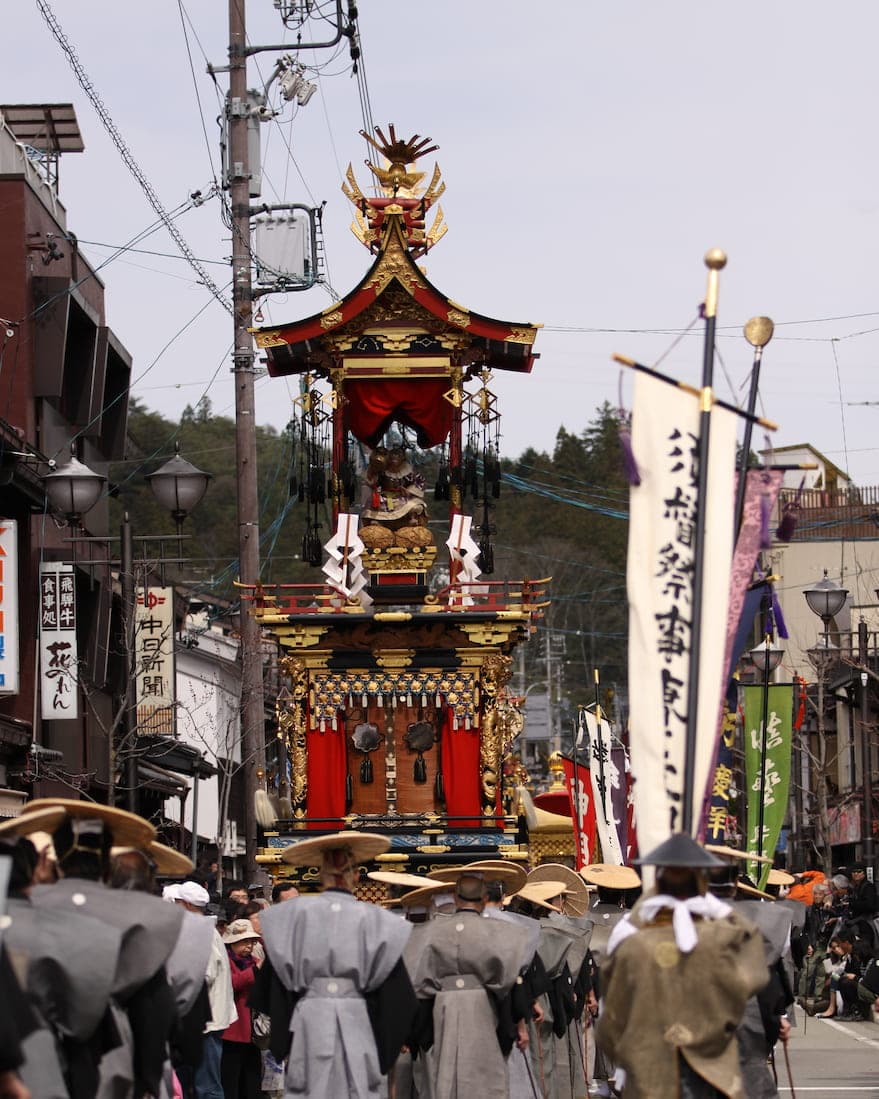
The Takayama Autumn Festival (Hachiman Matsuri) centres on the Sakurayama Hachiman Shrine and is also known as the Hachiman Festival. It takes place once the harvest is in and serves as a festival of thanksgiving.
The yatai floats are hung with traditional lanterns and taken on a tour through the city, accompanied by people dressed in kimono or hakama.
The festival is held in Takayama, in Gifu, Japan. The dates are not confirmed yet: it is expected to start on 9 October 2027, and the usual pattern is for it to run from 9 to 10 October. The edition is listed as scheduled, but this is also an estimate for now.
No details on access are available yet, so check the programme with the organiser, the Takayama Yatai Hozonkai (Takayama Float Preservation Society), before planning a trip.
History and meaning
The Takayama festivals are believed to have begun under the Kanamori family, and are placed in the 16th to 17th century. Letters dated 1692 place the origin of the festivals 40 years before that year.
The festival floats date from the 17th century. They are decorated with carved gilded wood and metalwork in a style resembling Kyoto art of the Momoyama period.




Photo credits
Licence: CC BY 3.0
Cropped from the original
Source: commons.wikimedia.org
Cropped from the original
Cropped from the original
Cropped from the original
Cropped from the original
Cropped from the original
Cropped from the original
Cropped from the original
Cropped from the original
Cropped from the original
Cropped from the original
Cropped from the original


Background sources: Wikipedia