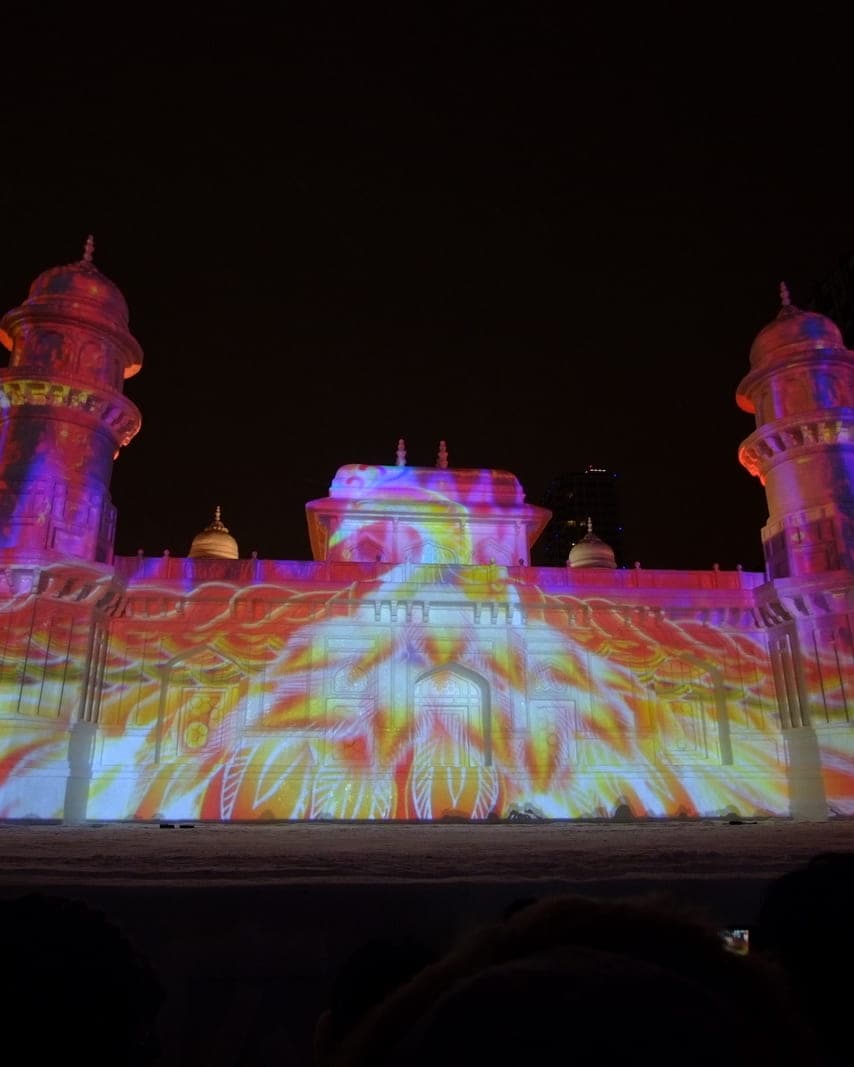
Sapporo Snow Festival
The Sapporo Snow Festival (さっぽろ雪まつり) is a winter festival of snow statues and ice sculptures in Sapporo, Hokkaido, expected from 4 to 11 February 2027, though the dates are not confirmed yet.
Researched and written with AI
Checked against the official source on
Check the official site before booking.
Key facts
- Event
- Sapporo Snow Festival
snowfes.com, checked
- Where
- Sapporo, Japan
snowfes.com, checked
- When
- – Feb 2027
snowfes.com, checked
- Price
- Price TBC
snowfes.com, checked
- Nearest airports
- Sapporo Okadama Airport (OKD), 7 km away in a straight line
OurAirports, checked
- Official source
- Sapporo Snow Festival Executive Committee (さっぽろ雪まつり実行委員会), official site snowfes.com
snowfes.com, checked
- Last verified
- Checked
When to book
Event starts
About Sapporo Snow Festival
The Sapporo Snow Festival (さっぽろ雪まつり) fills parts of Sapporo with large snow statues and ice sculptures. Reference sources note that the subjects are often drawn from events, buildings or people of the previous year.
The organisers say the large snow sculptures are made by a Ground Self-Defense Force support unit working with the festival's large-sculpture production committee. They put the total at around 200 snow and ice sculptures, and say the festival as a whole needs roughly 3,000 truckloads of snow.
The next edition is expected to run from 4 to 11 February 2027 in Sapporo, Hokkaido. Both the dates and the place are estimates until the organisers, the Sapporo Snow Festival Executive Committee, confirm them. The festival usually takes place in February.
What happens
The Sapporo Citizen Snow Sculptures event invites groups to take part. Each group makes a sculpture in its own style, and residents and tourists enjoy photographing them.
Members of the public have also been able to help build the large snow sculptures since 1987. Today they do so as volunteers at the Odori site, working under the guidance of the production crew.
History and meaning
Reference sources say the festival began in 1950 as a one-day affair in Odori Park, built by local high-school students. The Self-Defense Forces first joined the snow sculpture building in 1955 and produced the first giant sculptures. The Makomanai site became an official festival site in 1965, then moved to Sapporo Satoland in 2006 and to the Tsudome sports facility in 2009.
A main theme was first set in 1967, and since 1978 a single standing theme, 'a world plaza calling up pure-white dreams', has been used. The organisers record that 'Gulliver, Welcome to Sapporo', a 25-metre snow sculpture made in 1972, is the largest in the festival's history, and that TV coverage during that year's Sapporo Winter Olympics drew world attention. The first international contest followed in 1974, with teams from Canada, France, South Korea, South Vietnam, the United States and Japan.
The 1974 oil crisis put the festival at risk, as fuel for hauling snow was hard to obtain. Oil drums were packed inside some large and medium sculptures, 800 in the large ones alone, to make up the shortfall.
What to expect
The Tsudome site has a giant snow slide and other attractions. The organisers say building them takes around 1,400 truckloads of snow in a typical year.
Practical tips
Shoes without good grip are a problem on snowy ground. Slip-on anti-slip attachments can be bought at the official shop at the Odori site, at nearby convenience stores and at kiosks in JR and subway stations.
The Odori and Tsudome sites cannot be entered before the festival opens. At the Susukino site, though, you can watch the ice carving just before opening.
For safety, the sculptures are demolished the morning after the festival ends, so anyone arriving later will find only piles of snow.



Photo credits
Licence: CC BY-SA 3.0
Cropped from the original
Source: commons.wikimedia.org
Cropped from the original
Cropped from the original
Cropped from the original
Cropped from the original
Cropped from the original
Cropped from the original
Cropped from the original
Cropped from the original
Cropped from the original
Cropped from the original
Cropped from the original


Background sources: Wikipedia