
Sanja Matsuri
Sanja Matsuri (三社祭) is a Shinto festival at Asakusa Shrine in Asakusa, Tokyo, expected from 14 to 16 May 2027, though the dates are not confirmed yet.
Free to attend
Researched and written with AI
Checked against the official source on
Check the official site before booking: asakusajinja.jp
Key facts
- Event
- Sanja Matsuri
asakusajinja.jp, checked
- Where
- Asakusa, Japan
asakusajinja.jp, checked
- When
- – May 2027
asakusajinja.jp, checked
- How to get in
- Free to attend
asakusajinja.jp, checked
- Price
- Free
asakusajinja.jp, checked
- Nearest airports
- Tokyo Haneda International Airport (HND), 18 km away in a straight line
OurAirports, checked
- Official source
- Asakusa Shrine (浅草神社), official site asakusajinja.jp
asakusajinja.jp, checked
- Last verified
- Checked
When to book
Event starts
About Sanja Matsuri
Sanja Matsuri is a Shinto festival held at Asakusa Shrine in Tokyo, in honour of the 3 men who founded the Buddhist temple Sensō-ji. Its name translates as 'Three Shrine Festival', after the 3 mikoshi, or portable shrines, around which the main parades revolve, alongside traditional music and dance.
The festival is expected to run from 14 to 16 May 2027. These dates are an estimate based on the usual pattern of a May festival, and the final dates have not been announced yet.
It is expected to be a public street event. The grand procession (大行列) is understood to pass along 3 roads, Yanagi-dori, Umamichi-dori and Kaminarimon-dori, then go through Kaminarimon and Nakamise on its way to the shrine. No tickets are mentioned, but this is also unconfirmed.
History and meaning
The shrine relates that in the old boat festival the mikoshi are said to have been loaded onto boats crewed by fishermen and rowed up the Sumida. This boat festival lasted until the end of the Edo period and was discontinued in the Meiji era.
According to the shrine, the festival of old seems to have centred less on carrying the main shrine's mikoshi than on floats sent out by the parish towns, each of which tried to make its own procession the most splendid.
Once the boat festival was abolished in the Meiji era, the shrine began taking its mikoshi in procession through its present-day parish districts, and it still does so today.


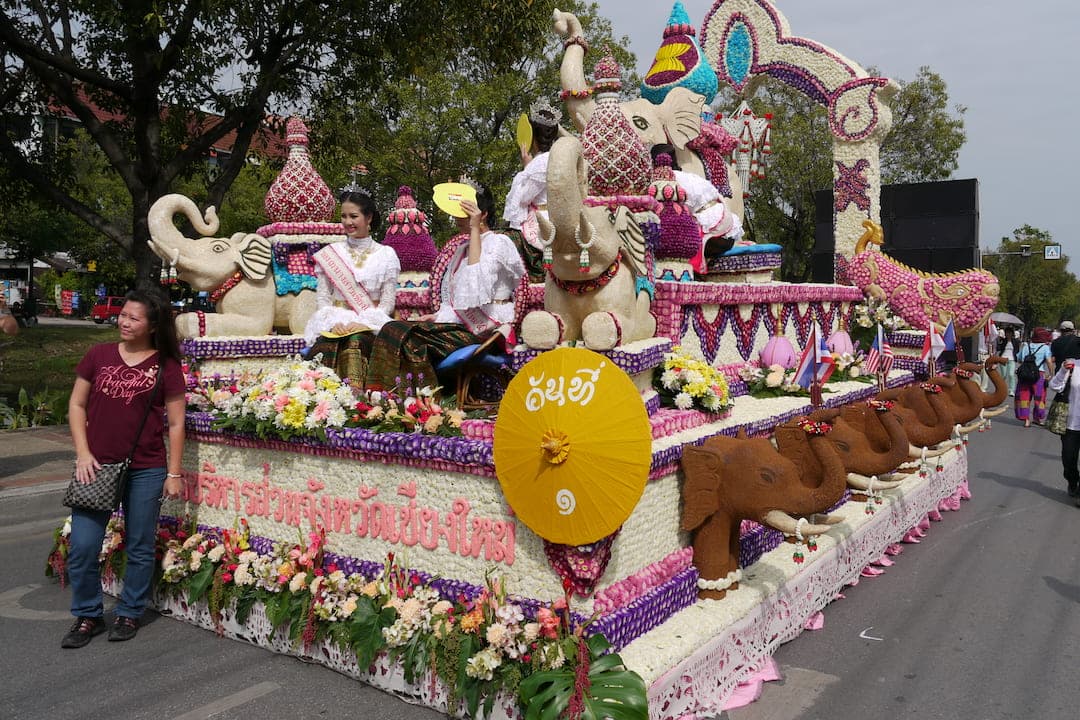
Photo credits
Cropped from the original
Cropped from the original
Cropped from the original
Cropped from the original
Cropped from the original
Cropped from the original
Cropped from the original
Cropped from the original
Cropped from the original
Cropped from the original
Cropped from the original
Cropped from the original


Background sources: Wikipedia